
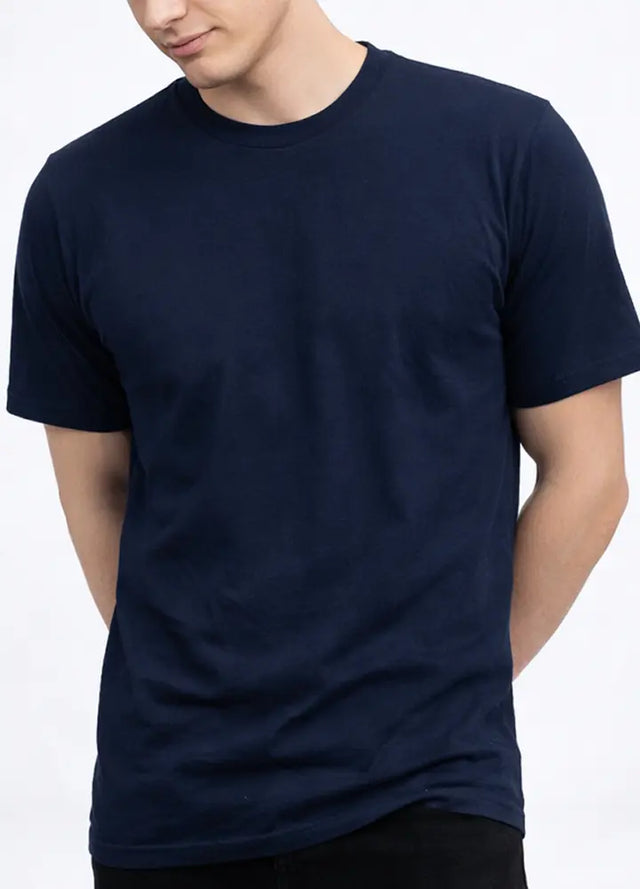
Best Blank T-Shirts for Screen Printing: What Printers Should Look For
A great screen print starts long before ink touches the shirt.
The artwork matters. The ink matters. The screen setup matters.
But the blank T-shirt underneath all of that matters just as much.
Choosing the best blank shirts for screen printing can make production more consistent, improve the finished appearance of the print and help the final product feel more professional.
For screen printers, clothing brands, merchandise companies and decorators, the blank is not simply something to print on. It is the foundation of the finished product.
So what should you actually look for when choosing blank T-shirts for screen printing? Let's break it down.
1. Start With the Fabric
The first thing to consider when choosing blank shirts for screen printing is fabric composition.
Different fabrics behave differently during printing. Cotton remains one of the most commonly used fabrics for printed T-shirts because it generally provides a familiar hand feel and a reliable surface for many decoration methods.
Blended fabrics can also work extremely well, particularly when the goal is softness, drape or a specific finished feel.
The important thing is not simply asking, 'Is this cotton?' Instead, ask what the fabric composition is, how smooth the surface is, what type of finish the garment has, how it will respond to the printing method being used, and whether the same fabric will be available when the customer reorders.
When you're producing merchandise at scale, consistency can matter just as much as the initial print.
2. Look Closely at the Print Surface
A blank T-shirt can look good on a hanger and still create problems during decoration.
One of the biggest differences between ordinary blanks and good screen printing T-shirts is the quality of the printable surface. A smoother surface generally gives the printer a cleaner foundation to work with.
Look at the garment up close. Check for surface consistency, excessive fuzziness, uneven texture, fabric irregularities and areas where the knit appears inconsistent.
The cleaner and more consistent the surface, the easier it becomes to produce repeatable results. That is particularly important for detailed graphics, fine typography, large front prints, multi-color artwork and brand merchandise that may be reordered repeatedly.
A blank is part of the printing process, even though it arrives before the printing begins.
3. Choose the Right T-Shirt Weight
One of the most common mistakes is assuming there is one ideal weight for screen printing. There isn't.
The best blank T-shirt for screen printing depends on what the finished product is supposed to become.
Lightweight blank T-shirts
A lighter blank can work well for everyday merchandise, promotional apparel, warm-weather products, softer retail-oriented collections and casual branded T-shirts. The garment may feel lighter and drape more naturally.
Midweight blank T-shirts
Midweight garments can provide a useful balance between everyday comfort and additional structure. They can work particularly well for brands that want one core T-shirt suitable for several applications.
Heavyweight blank T-shirts
Heavyweight blanks can work well for premium streetwear, structured silhouettes, oversized styling, higher-impact merchandise collections and brands that want a substantial hand feel.
Heavier does not automatically mean better. Lighter does not automatically mean cheaper. The right blank is the one that matches the final customer experience.
4. Check the Collar
Screen printers often focus on the chest because that is where the artwork goes. Customers notice the entire garment.
A weak collar can make an otherwise good printed T-shirt feel disappointing.
Before committing to a large order of wholesale blank T-shirts, check collar thickness, rib construction, neckline shape, stitching and recovery after stretching.
The print can be perfect, but if the collar loses shape quickly, the customer may judge the entire product negatively. For apparel brands, construction is part of brand perception.
5. Check the Fit Before You Order in Bulk
A blank T-shirt is not just a printing surface. It is a garment somebody is going to wear.
Fit influences whether the finished product feels retail, classic, relaxed, oversized, fitted or structured.
Before ordering hundreds of units, sample the blank. Put it on real people and check shoulder position, body width, body length, sleeve length, neckline and overall silhouette.
If you're building a clothing brand, the fit eventually becomes associated with your brand. Changing blanks constantly can also change how your customers experience your products.
That is why choosing the right blank early can help create more consistency over time.
6. Think About Shrinkage Before Printing
Shrinkage can affect both the garment and the artwork.
When comparing the best blank shirts for screen printing, look at the manufacturer's fabric and care information. If possible, test the garment: print it, wash it, wear it and see what actually happens.
Sampling may feel like an extra step when you're trying to launch quickly. It is still cheaper than discovering a problem after producing 500 printed shirts.
7. Label Construction Matters for Clothing Brands
If you're printing merchandise for a clothing brand, the original label can matter.
Brands may want to add their own neck label, heat-transfer branding, custom packaging, size identification or private-label presentation.
A relabel-friendly garment can make it easier to turn a blank into something that feels like a finished branded product. Your customer should ideally see the clothing brand they purchased from. The blank supplier should remain the foundation underneath it.
8. Color Availability Is More Important Than It Looks
Imagine finding the perfect blank. The print comes out great. Customers love the finished product. Then you try to reorder the same color and cannot find it.
That becomes a business problem.
When selecting blank apparel for screen printing, consider both today's order and tomorrow's reorder. For core products, reliable color availability can matter enormously, especially for uniforms, ongoing corporate merchandise, school programs, recurring brand collections and bestseller replenishment.
The perfect color is less useful if you can never source it again.
9. Test Before You Order 100, 500 or 1,000 Pieces
There is a simple rule worth remembering: A sample costs less than 100 mistakes.
Before committing to a large production run, order the blank, inspect the garment, print it, wash it, evaluate fit and print appearance, confirm color and size availability, and then scale.
This small process can remove a lot of uncertainty.
What Makes a Good Screen Printing Blank?
The best screen printing blank should give you a reliable combination of appropriate fabric, a smooth printing surface, suitable garment weight, consistent construction, good fit, dependable availability and decoration-friendly details.
The goal is not to find the cheapest shirt. The goal is to find the right foundation for what you're producing.
Choosing Circle Clothing Blank T-Shirts
Circle Clothing offers blank T-shirts across different weights, fabrics, fits and colors so printers and brands can choose according to the finished product they are trying to create.
Instead of treating every T-shirt as interchangeable, compare your options based on weight, fit, fabric, decoration method and end use. That makes the buying decision much easier.
Explore Circle Clothing Blank T-Shirts -> [Internal link: Unisex / Men's T-Shirts]
Shop All Blank Apparel -> [Internal link: All Products]
Frequently Asked Questions
What is the best blank T-shirt for screen printing?
The best blank depends on your artwork, printing process, desired fit and finished product. A smooth, consistent surface, suitable fabric and dependable construction are good starting points.
Are heavyweight shirts better for screen printing?
Not necessarily. Heavyweight shirts provide a different structure and hand feel, but lightweight and midweight garments can also be excellent for screen printing. Choose according to the finished product.
Should I test blank shirts before ordering in bulk?
Yes. Sampling allows you to evaluate fit, fabric, printing performance and wash behavior before committing to a large production order.
What should clothing brands look for in blank T-shirts?
Beyond printing quality, clothing brands should consider fit, fabric weight, label construction, color availability, sizing and reorder consistency.